
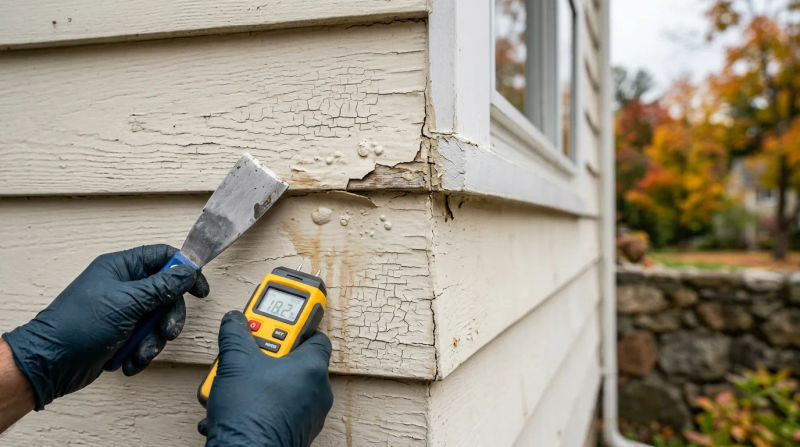
As a service technician with over a decade of experience in northern Westchester County, I’ve seen how the shift from summer to fall can reveal hidden issues with a home’s exterior. You might be enjoying a crisp September evening in Katonah when you notice it: small chips of paint on your patio, or a section of siding near a window that looks swollen and bubbled. These aren’t just cosmetic blemishes; they are the first warnings that your home's primary line of defense against the elements is starting to break down. With colder, wetter weather on the horizon, now is the critical time to assess the health of your exterior paint.
An exterior paint coat does more than provide curb appeal. It is a protective shield, sealing your home’s siding and trim from moisture, UV radiation, and pests. When that shield is compromised, it can lead to wood rot, water damage, and more expensive repairs down the line. Understanding the signs of exterior paint failing allows you to act before a small problem becomes a major one.
Common Signs and Symptoms
Walking the perimeter of your home for a visual inspection is the best first step. Our technicians follow a standardized process to ensure nothing is missed, but you can spot many of the same key indicators yourself. Look for these common signs of paint failure:
- Peeling, Flaking, or Chipping: This is the most obvious sign. Paint is physically detaching from the surface below. It can range from small flakes to large sheets peeling away. This indicates a loss of adhesion, often due to moisture or poor surface preparation from a previous paint job.
- Blistering or Bubbling: Paint bubbles are pockets of moisture or air trapped beneath the paint film. When you see blistering exterior paint Katonah NY homes often experience, it’s a red flag for a moisture problem. The water could be coming from inside the house (e.g., a bathroom without proper ventilation) or from the outside (e.g., a leaky gutter or failed caulking). Pushing on a blister will often release water.
- Chalking: Run your hand over the painted surface. Does a fine, powdery residue come off on your fingers? This is called chalking. It happens as the paint’s binders are broken down by years of sun and rain. While a small amount of chalking is normal as paint ages, excessive chalking means the paint film has eroded and is no longer providing adequate protection.
- Cracking and Alligatoring: As paint ages and becomes brittle, it can develop a pattern of fine, interconnected cracks. When this pattern is deep and widespread, it resembles the scaly skin of an alligator. This “alligatoring” is a sign of advanced paint failure, indicating the surface can no longer expand and contract with temperature fluctuations.
- Fading and Uneven Color: While all paint fades over time due to UV exposure, significant or uneven fading suggests the pigments have broken down. This is more than a cosmetic issue; it means the paint’s protective qualities are also diminished. South-facing walls typically show fading first.
- Mold, Mildew, or Algae: Dark streaks or green, fuzzy spots, especially on the north side of the house or in shaded, damp areas, indicate organic growth. While some paints have mildewcides, their effectiveness wanes over time. This growth traps moisture against the surface, accelerating decay.
What Causes This Problem
Understanding why your paint is failing is key to ensuring the next coat lasts. Simply painting over the problem will only lead to the same failure within a year or two. Here are the primary root causes we encounter in the field:
- Moisture Intrusion: This is the number one enemy of any paint job. Water can get behind paint from failing caulk around windows and doors, clogged gutters overflowing onto fascia boards, ice dams in the winter, or even from moisture vapor passing through the walls from inside your home.
- Inadequate Surface Preparation: A lasting paint job is built on a solid foundation. If the previous painters cut corners by not properly cleaning, scraping, sanding, and priming the surface, the new paint will never achieve a strong bond. All chalking, dirt, mildew, and loose paint must be completely removed before any new coating is applied.
- Weather and Age: The climate in our region presents unique challenges. The frequent freeze-thaw cycles are one of the leading peeling paint in cold weather causes. Moisture seeps into tiny cracks in the paint, then freezes and expands, forcing the paint film away from the substrate. Over many years, the constant exposure to sun, rain, and temperature swings simply wears out the paint’s protective binders.
- Paint Applied in Poor Conditions: Applying paint when it's too cold, too hot, too sunny, or too humid can ruin the job before it even cures. For instance, paint applied on a cool fall evening may not cure properly before the dew sets in, trapping moisture and leading to adhesion failure down the road.
- Structural and Material Issues: Many homes in the Katonah area, particularly the split-level and bi-level styles common from the 1960s and 1970s, feature a mix of exterior materials like wood siding and brick. These materials expand and contract at different rates, putting stress on the caulk joints and paint seams between them. Furthermore, older homes may have many layers of old paint, some of which might be incompatible oil-based products that new latex paints struggle to adhere to without proper priming.
When evaluating chalking vs peeling exterior paint, remember that chalking is a sign of age and erosion, while peeling is a sign of adhesion failure, often linked directly to moisture or poor prep.
When to Call a Professional
Deciding between a DIY project and hiring a professional crew often comes down to three factors: scope, safety, and skills.
- Consider DIY if: The problem is very limited. For example, a few small peeling spots on a first-floor window trim that you can easily reach, clean, sand, prime, and paint yourself. If it’s a simple case of surface mildew on a small, accessible area, a good cleaning might be all that’s needed.
- Call a Professional if:
- The failure is widespread, affecting multiple walls or large sections.
- The work involves heights, requiring tall ladders or scaffolding. Our crews are trained and insured to work safely at height.
- You see signs of blistering or significant cracking. This suggests a deeper problem (like moisture intrusion) that needs to be diagnosed and fixed before any painting begins. A professional can identify the source of the water and recommend a solution.
- Your home was built before 1978. It may have lead-based paint, which is hazardous and requires certified professionals for safe handling and removal.
- You want the job done right and efficiently. A professional team has an organized workflow, the right equipment, and the expertise to properly prepare all surfaces and apply coatings under the right conditions for maximum longevity.
Conclusion
Your home’s exterior paint is a critical system, not just a decoration. Signs like peeling, blistering, and excessive chalking are clear indicators that this system is compromised, leaving the underlying wood and structure vulnerable to the harsh winter weather ahead. Ignoring these warnings can turn a straightforward painting project into a costly repair job involving carpentry and water damage remediation.
Take a walk around your property this fall and look closely at your siding and trim. Addressing issues now, while the weather is still cooperative, is the most effective way to protect your investment and ensure your home remains secure and beautiful for years to come.
If you notice any of these signs, contact a local Home Improvement professional for an inspection.