
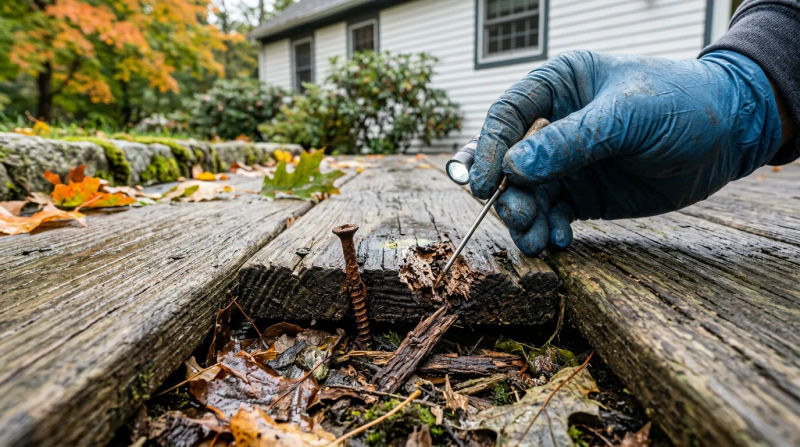
There’s a certain crispness to the air in Katonah as September rolls in. It’s that perfect time of year for enjoying one last barbecue or a quiet evening on the deck before the chill of winter truly sets in. As you lean back in your chair, perhaps you notice the railing gives a little more than it used to, or you feel a slight sponginess underfoot near the stairs. These subtle clues are your deck’s way of telling you it needs attention. With over 14 years of hands-on experience inspecting and repairing homes throughout northern Westchester County, I can tell you that autumn is the critical window for a thorough deck inspection. Addressing minor issues now can prevent them from becoming major safety hazards or costly repairs after a long, wet winter.
Common Signs and Symptoms
Recognizing the early deck repair signs is the first step toward ensuring your outdoor space remains safe and enjoyable for years to come. Our trained technicians follow a standardized process to evaluate every component of a deck, but here are some key indicators you can look for yourself.
- Wobbly or Loose Railings: This is one of the most urgent safety concerns. Give your railings a firm shake. Is there significant sway, wobble, or movement at the posts? This is a classic example of loose deck railing symptoms. It often points to corroded fasteners, rotted post bases, or improper connections that can fail under pressure. A secure railing is non-negotiable for safety, especially on elevated decks.
- Spongy or Soft Deck Boards: Walk across your entire deck, paying close attention to how the boards feel. If any areas feel bouncy, soft, or spongy, it’s a strong indication of moisture damage and rot. These are primary deck board rot indicators. You can gently probe a suspect area with a screwdriver; if the wood is soft and flakes away easily, rot has set in. Pay special attention to boards around planters, downspouts, and any areas where leaves tend to accumulate.
- Visible Wood Damage: Look for large cracks, deep splits, or splintering in the wood. While some minor cracking (called “checking”) is normal as wood ages, deep fissures that hold water can compromise the board’s strength and accelerate decay. Also, keep an eye out for small, perfectly round holes, which could be a sign of carpenter bees or other wood-boring insects.
- Corroded or Missing Fasteners: Inspect the screws, nails, and metal connectors (joist hangers, post anchors) that hold your deck together. Are there rust stains bleeding from the screw heads? Are some fasteners loose, popped up, or missing altogether? Corrosion weakens these critical connections, and the intense freeze-thaw cycles we experience in Katonah can cause loose fasteners to work their way out even further over the winter.
- Gaps Between the Deck and the House: The connection point between your deck and your home, known as the ledger board, is the most critical structural element. Look for any separation or gap forming here. A failing ledger board can lead to a catastrophic deck collapse. This is particularly important for the beautiful pre-1940s Tudor and Colonial Revival homes found in our area. Attaching a deck ledger to their characteristic brick or stone exteriors requires specialized techniques and hardware that may not have been used on older deck installations.
- Water Pooling or Poor Drainage: After a rain, does water stand in puddles on your deck’s surface? This could be due to warped boards, a settled foundation, or an improper slope. Trapped moisture is the number one enemy of any wood structure, and persistent puddles create a perfect environment for rot and mildew.
- Failing Finish: A deck’s stain or sealant is its first line of defense against UV rays and moisture. If the finish is peeling, flaking, or has worn away entirely, the wood is exposed to the elements. Wood that has turned gray and fuzzy is unprotected and is actively absorbing water, which will lead to more significant structural issues down the line.
What Causes This Problem
Understanding the root causes of deck deterioration can help you prevent future issues. In my experience, most deck problems boil down to a few key culprits, especially in our local climate.
Moisture Intrusion: This is, without a doubt, the primary cause of most deck failures. Rain, snow, and ice are unavoidable, but how your deck handles that moisture is what matters. Poor ventilation underneath the deck, debris like wet leaves trapping moisture against the boards, and clogged gutters dumping water onto the structure all contribute to wood rot. The constant freezing and thawing during a Katonah winter expand and contract the water absorbed by the wood, breaking down its fibers over time.
Age and Material Lifespan: Every material has a lifespan. A pressure-treated pine deck might last 15-20 years with excellent maintenance, while composite or hardwood decks can last longer. However, even the most robust materials degrade under constant exposure to the elements. Fasteners corrode, wood loses its natural oils, and sealants break down. Many decks built in the 1990s or early 2000s are now reaching the end of their expected service life.
Improper Installation: Unfortunately, our crews often encounter decks that were not built to modern safety codes. Common issues include a ledger board that is merely nailed to the house instead of being secured with structural bolts, support posts set directly in soil without concrete footings, or inadequate spacing for joists, leading to a bouncy surface. These foundational flaws can create serious safety risks as the deck ages.
Pest Infestations: Termites, carpenter ants, and carpenter bees can cause significant structural damage. They tunnel through wood, weakening it from the inside out. This damage can often go unnoticed until it becomes severe, which is why regular inspections are so important.
When to Call a Professional
Some minor deck tasks are suitable for a handy homeowner. For example, cleaning your deck and applying a new coat of sealant is a great weekend project that can significantly extend its life. You might even feel comfortable replacing a single, non-structural deck board that has a crack in it.
However, the majority of deck repair signs warrant a call to an experienced professional. You should always seek expert help for:
- Any structural concerns: This includes wobbly posts, sagging beams, or any issues with the ledger board connection. These are not cosmetic problems; they are serious safety liabilities.
- Significant rot: If you have multiple soft boards or rot affecting support posts or joists, a professional needs to assess the extent of the damage and perform a proper repair.
- Widespread fastener failure: Replacing a few loose screws is one thing, but if many are corroded or loose, it may indicate a systemic issue.
- Railing repairs: Due to the critical safety function of railings, correcting loose deck railing symptoms should be left to professionals who understand code requirements for height, strength, and spindle spacing.
If you're unsure about the severity of any issue, the safest course of action is to schedule a professional Katonah NY deck inspection. Our technicians have the training to identify not just the obvious problems but also the subtle, underlying issues that could lead to failure. We use a standardized workflow to ensure every part of the structure, from the footings to the handrails, is thoroughly evaluated.
Conclusion
Your deck is more than just an addition to your house; it's a place for relaxation and making memories. Taking a proactive approach to its maintenance in the fall is the best way to protect that investment and, more importantly, your family’s safety. By looking for these common signs of trouble now, you can address them before the harsh winter weather has a chance to turn small problems into big ones. Don't wait for a railing to fail or a board to break. An inspection today provides peace of mind for all your seasons to come.
If you notice any of these signs, contact a local home improvement professional for an inspection.